Living in the Pacific Northwest is an unparalleled experience, characterized by lush evergreen forests, stunning mountain ranges, and, famously, an abundance of rain. While the constant drizzle and high humidity levels are what make Washington State so beautifully green, they also present a unique set of challenges for homeowners—especially when it comes to interior design and long-term home maintenance. If you are planning a renovation, selecting the right foundation for your rooms is an incredibly consequential decision. The perpetual moisture in the air and the wet shoes trudging through your entryway mean that standard, builder-grade materials simply will not cut it.
You need something that balances striking aesthetics with industrial-grade durability. In this comprehensive guide, we will explore the absolute best flooring options for Washington’s humid climate. We will take an in-depth look at how various materials react to moisture, breaking down the pros and cons of luxury vinyl plank, traditional hardwood, engineered wood alternatives, and porcelain tile. By understanding the structural integrity and moisture resistance of each option, you will be empowered to make a choice that protects your investment and elevates the style of your Seattle-area home for decades to come.
Why Washington’s Rain and Humidity Wreak Havoc on Your Floors
When you think of the Seattle area, you naturally think of heavy precipitation. However, it is not just the direct rainfall that poses a threat to your home’s interior; it is the pervasive, year-round ambient humidity. Washington’s climate is characterized by extended periods of dampness, where indoor moisture levels can fluctuate dramatically depending on the season and the operational cycles of your home’s heating system. This environmental reality creates a battleground for your interior surfaces.
Natural materials, particularly wood, are hygroscopic. This means they act like giant sponges, constantly absorbing moisture from the air when it is humid and releasing it when the air dries out. Over time, this constant cycle of absorption and evaporation leads to significant structural distress. Choosing materials with a low absorption rate is critical to preventing long-term structural damage in damp environments. Homeowners who install inappropriate materials often find themselves dealing with cupping, where the edges of the boards rise higher than the center, or crowning, where the center swells upward.
In severe cases, trapped moisture can even lead to hidden mold growth beneath the surface, which compromises indoor air quality and requires thousands of dollars in remediation. It is essential to recognize that the foundation of your home must be engineered to withstand this invisible atmospheric pressure. The Pacific Northwest demands building materials that are fundamentally stable and highly resistant to moisture penetration. Therefore, your selection process must prioritize dimensional stability just as highly as visual appeal.
The Science of Flooring: Why Materials Expand and Contract in the PNW
To truly understand why certain floors fail while others thrive in Washington, we must delve into the basic science of how building materials interact with water vapor. Every material has an equilibrium moisture content (EMC). This is the exact point at which the material is neither gaining nor losing moisture from the surrounding air. In a typical Seattle home, the relative humidity can swing from bone-dry during the winter heating season to incredibly damp during the rainy spring and fall.
When organic materials like solid wood are exposed to these swings, their cellular structure physically changes. The wood fibers swell as they take on water, causing the planks to expand outward. Because floors are installed tightly against one another, this expansion creates immense lateral pressure. You must ensure installers leave an adequate expansion gap around the perimeter of the room to accommodate natural shifting. If the pressure exceeds the structural limits of the installation, the planks will buckle, warp, or even pop off the subfloor entirely.
Conversely, when the indoor air becomes excessively dry, the planks contract, leaving unsightly gaps between the boards that accumulate dust and debris. Synthetic and inorganic materials, on the other hand, lack this cellular structure. Porcelain tile and luxury vinyl are manufactured to be inert, meaning they do not respond to changes in atmospheric humidity. Understanding this cellular mechanics is the key to making an informed decision. Monitoring indoor humidity levels with a digital hygrometer is an essential practice for preserving organic elements in your home.
Solid Hardwood: A Classic Choice, But Is It Safe for Seattle Homes?
Solid hardwood has been the absolute gold standard in residential flooring for centuries. It offers an undeniable warmth, a timeless elegance, and a sense of luxury that is difficult to replicate with synthetic alternatives. Many Washington homeowners dream of installing wide-plank oak, rich walnut, or gleaming maple throughout their primary living spaces. However, when we evaluate solid hardwood strictly through the lens of Seattle’s persistent dampness, significant vulnerabilities quickly emerge.
Because each plank is milled from a single, solid piece of timber, it retains the natural, hygroscopic properties of the living tree. This makes it incredibly susceptible to the expansion and contraction cycles discussed earlier. If you are determined to install solid hardwood in a humid climate, strict environmental controls are absolutely non-negotiable. Maintaining a consistent indoor humidity level between 35% and 55% year-round is mandatory to protect solid wood investments. This often requires the installation of whole-home humidification and dehumidification systems integrated directly into your HVAC setup.
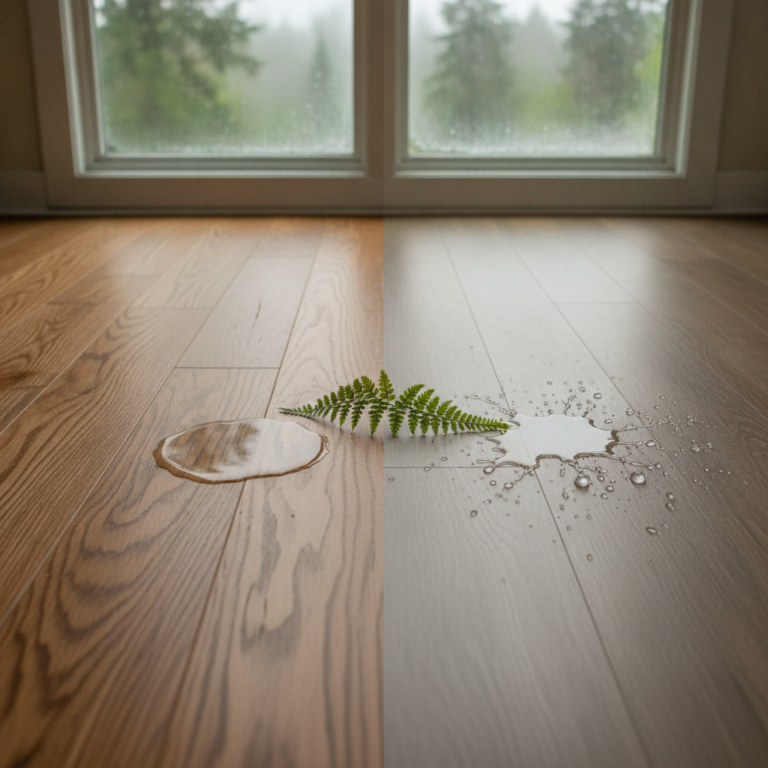
Furthermore, solid hardwood is highly vulnerable to topical moisture. A spilled glass of water, wet shoes, or a damp dog coming in from the rain can cause permanent water spots or warping if not immediately dried. For entryways, kitchens, and bathrooms, solid hardwood is universally discouraged by local contractors. It is a beautiful material, but in the Pacific Northwest, it requires a level of vigilance and daily maintenance that many busy homeowners find exhausting.
Engineered Hardwood: The Smarter Wood Alternative for Wet Climates
For homeowners who refuse to compromise on the authentic look and feel of real wood, engineered hardwood presents a vastly superior alternative tailored for the Washington climate. Unlike solid wood, engineered planks are constructed using a highly specialized, multi-layered design. The core of the plank is typically made from high-quality plywood or high-density fiberboard (HDF), with the grain of each layer running perpendicular to the adjacent layer.
This cross-ply construction acts as a built-in stabilizing force. When the ambient humidity rises and the wood attempts to expand, the perpendicular layers restrict the movement, effectively neutralizing the natural tendency to warp or cup. Opting for a cross-ply constructed core will dramatically reduce the risk of warping in high-moisture environments. The top layer, known as the wear layer, is a veneer of genuine hardwood. This means that once installed, engineered floors look completely identical to solid hardwood—because the surface you are walking on is real wood.
It provides the exact same warmth, the same rich grain patterns, and the same comfortable underfoot feel. In Seattle and the broader Pacific Northwest, engineered hardwood beautifully bridges the gap between aesthetic desires and environmental realities. While it is still not entirely waterproof and should not be used in full bathrooms, it is far more forgiving of the region’s humidity fluctuations. Verify that the engineered wood has a wear layer of at least 3mm to ensure it can be sanded and refinished in the future.
Luxury Vinyl Plank (LVP): The Ultimate Waterproof Hero
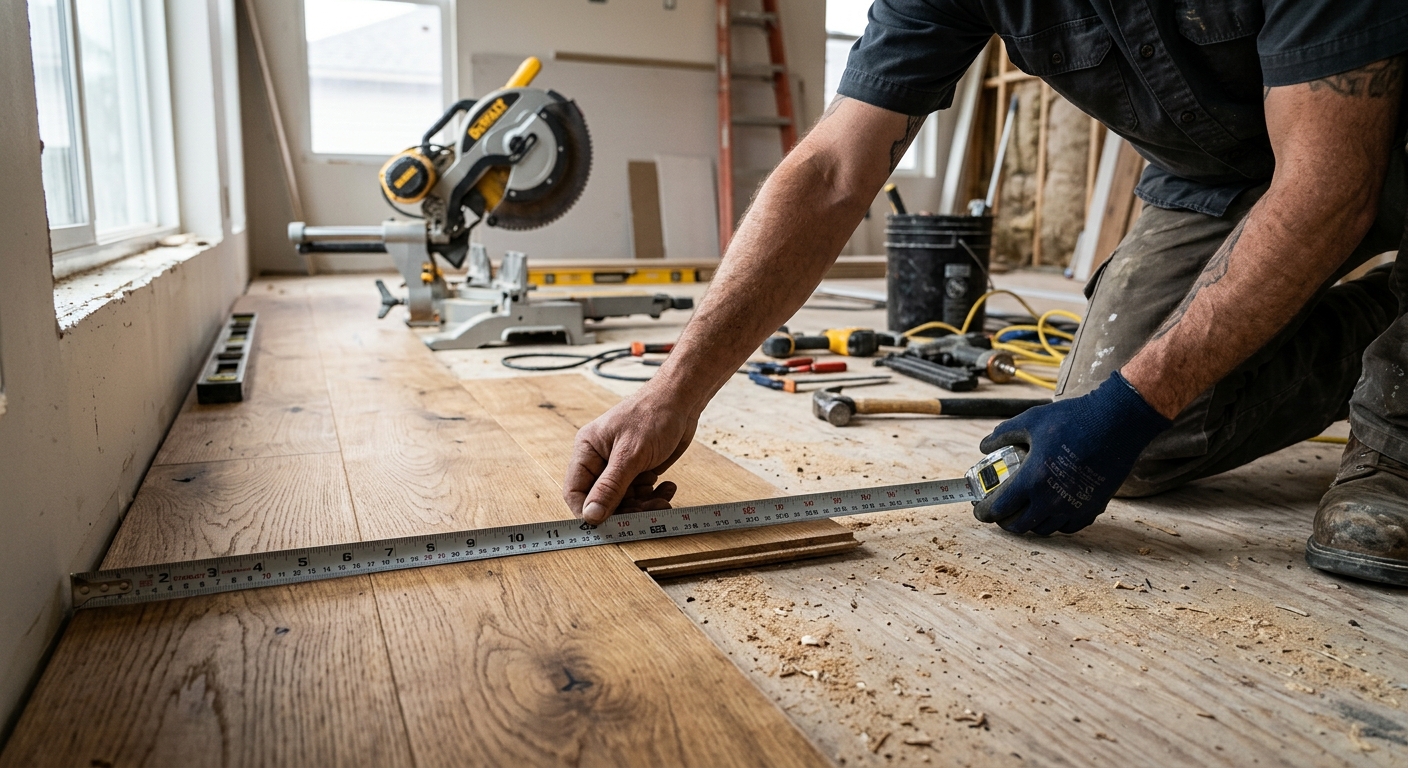
Over the past decade, Luxury Vinyl Plank (LVP) has completely revolutionized the interior design industry, and it has undeniably become the undisputed champion for homes in rainy climates like Washington. LVP is an entirely synthetic product, typically constructed with a rigid core made from a composite of stone or wood plastic (SPC or WPC). This core is topped with a high-definition photographic layer that incredibly mimics the exact look of hardwood or stone, and it is finished with a robust, clear wear layer.
The most significant advantage of LVP is that it is 100% waterproof. Not just water-resistant, but entirely impervious to moisture. You could submerge an LVP plank in a bathtub for a week, and it would not swell, warp, or degrade. Installing an SPC rigid core vinyl provides maximum dent resistance and total immunity to topical water damage. This makes it the ultimate stress-free option for busy Seattle households. You no longer have to panic when the kids run in with muddy boots or the dog shakes off the rain in the hallway.
Wet umbrellas, spilled drinks, and dripping coats are absolutely no match for a high-quality LVP floor. Furthermore, modern manufacturing techniques have advanced so far that premium LVP is virtually indistinguishable from real wood to the untrained eye. It features embossed-in-register textures, meaning the physical grooves on the surface perfectly align with the printed grain pattern. It is also inherently softer and warmer underfoot than tile, making it incredibly comfortable for everyday living.
Porcelain and Ceramic Tile: Unmatched Moisture Resistance
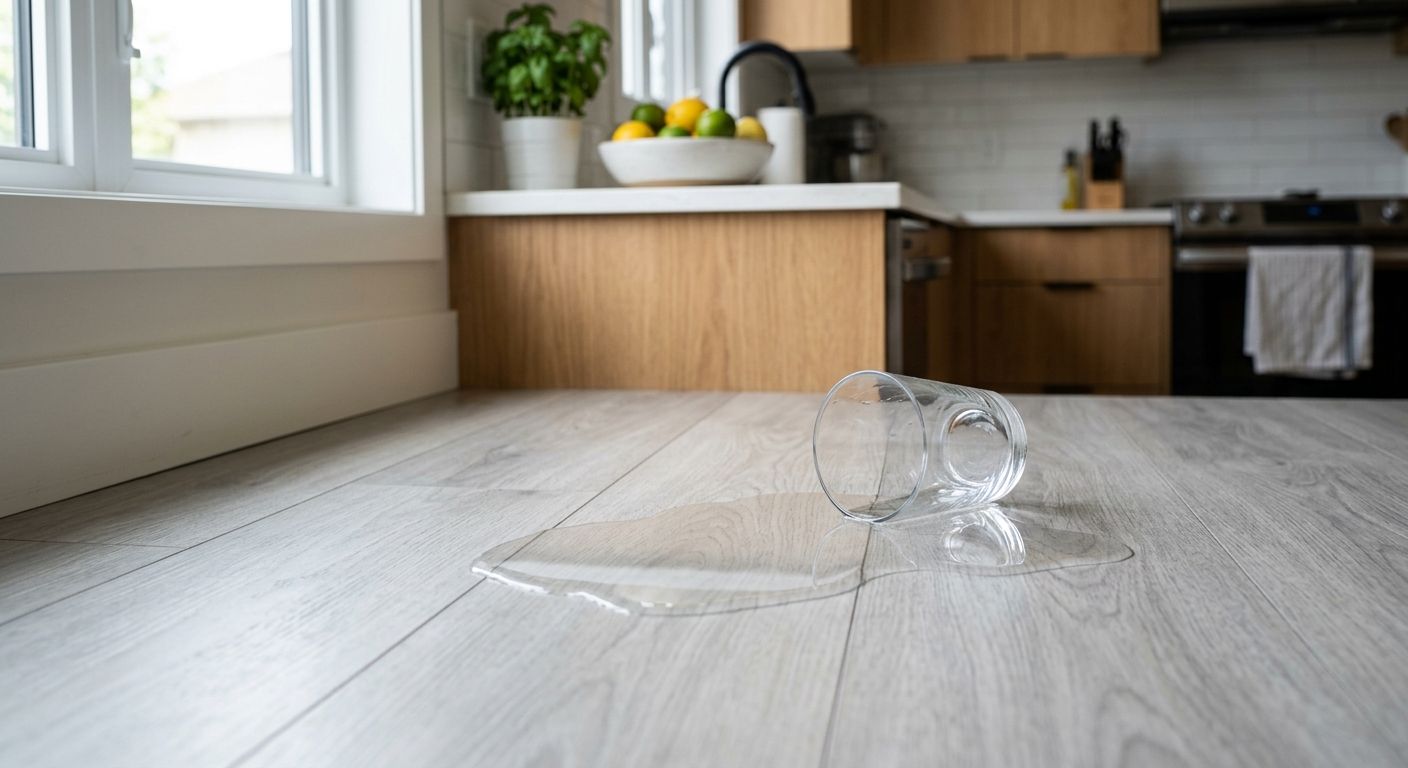
When it comes to absolute, uncompromising defense against water, porcelain and ceramic tiles remain firmly at the top of the architectural hierarchy. Baked in kilns at incredibly high temperatures, these materials are dense, completely non-porous, and utterly unaffected by both ambient humidity and standing water. In a climate where rain is a constant companion, tile is the traditional and most reliable choice for high-moisture zones such as bathrooms, mudrooms, laundry rooms, and busy kitchens.
Porcelain, in particular, has an incredibly low water absorption rate of less than 0.5%, making it virtually impervious to liquid penetration. However, the grout lines between the tiles remain vulnerable. Applying a high-quality penetrating sealer to your grout lines annually is critical to preventing mold and mildew buildup in wet areas. Beyond their functional supremacy, modern tiles offer extraordinary design versatility. With advanced inkjet printing technology, manufacturers can produce porcelain tiles that perfectly mimic the look of natural distressed wood or sleek marble.
This allows you to maintain a cohesive aesthetic throughout your home while utilizing a bulletproof material in the wettest rooms. However, tile does have a few distinct drawbacks in the Pacific Northwest. It is inherently cold to the touch, which can be jarring during the chilly, damp winter months. Integrating an electric radiant floor heating system beneath the tile will drastically improve comfort during cold snaps. Despite minor comfort issues, the unmatched longevity of porcelain tile makes it indispensable.
LVP vs. Hardwood vs. Tile: Quick Comparison Guide
Navigating the myriad of options can be overwhelming, so it is deeply helpful to break down the performance of LVP, engineered hardwood, and porcelain tile across the specific challenges presented by the Washington climate. When we strictly look at water resistance, porcelain tile and Luxury Vinyl Plank tie for first place. Both offer 100% waterproof capabilities, making them entirely immune to the daily drizzles and muddy footprints so typical of Seattle winters.
Engineered hardwood, while impressively stable in changing humidity, is only water-resistant and will eventually suffer permanent damage if standing water is left unaddressed. In terms of aesthetic prestige and increasing your home’s resale value, engineered hardwood remains the premium choice. Real wood carries a psychological weight and an undeniable luxury that synthetics are still trying to fully match. Evaluating your household traffic and lifestyle is the most important step before committing to a high-end natural material.
LVP is an incredibly close second, offering excellent return on investment and massive appeal to young families looking for low-maintenance living. Tile adds tremendous value in bathrooms but may decrease the overall coziness factor if used in main living areas like bedrooms. Finally, let us consider the installation process. LVP is the clear winner for cost-effectiveness and speed. Requesting itemized installation quotes that separate material costs from labor will help you make an accurate budget comparison between these wildly different materials.
Top Tips to Protect Your Floors During Seattle’s Rainy Season
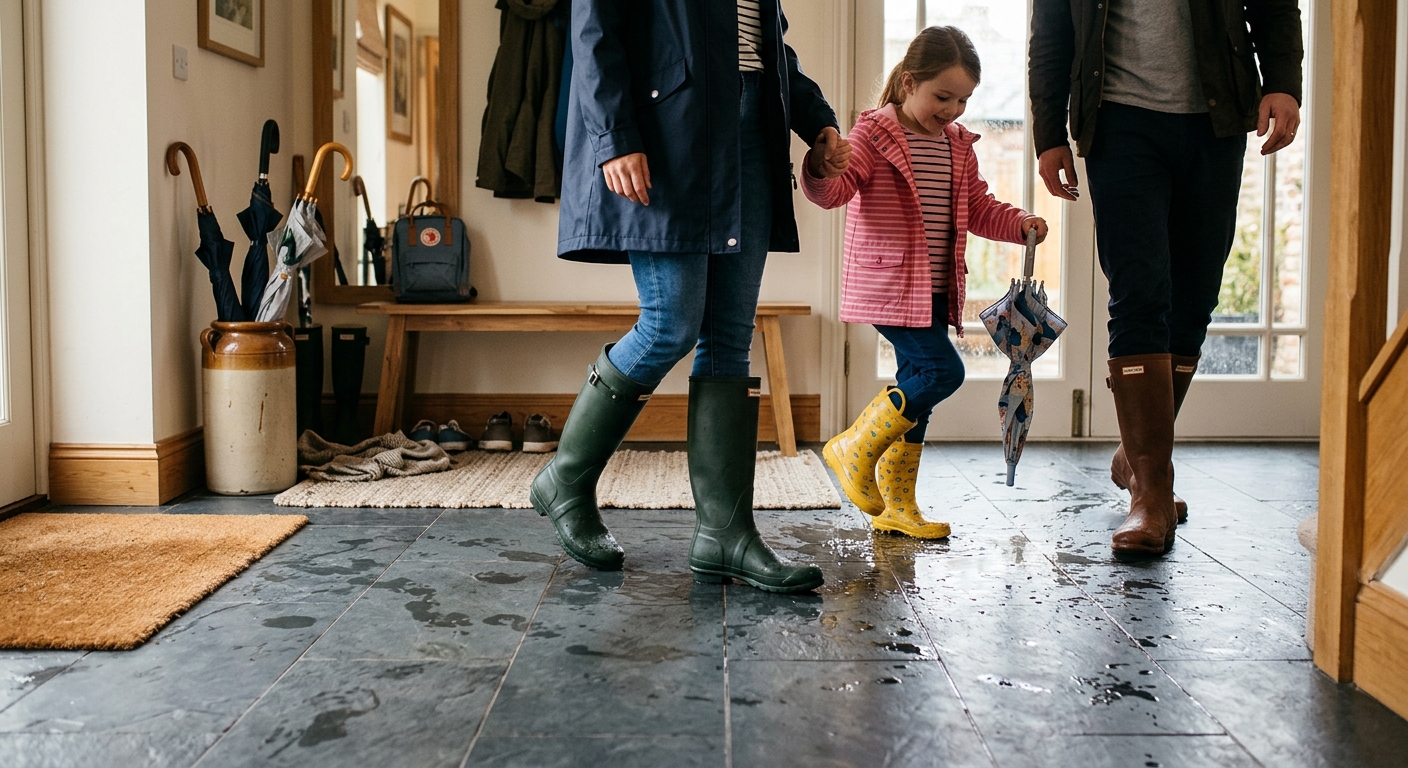
Even if you meticulously select the most durable, moisture-resistant materials on the market, proactive home maintenance is absolutely essential to extend the lifespan of your investment. The relentless Washington rain means that your floors are constantly under siege from moisture, grit, and organic debris tracked in from the outside environment. The first line of defense should always be a highly robust and deliberate entry mat system.
Placing heavy-duty, moisture-absorbing mats both inside and outside every exterior door will successfully trap up to 80% of incoming dirt and water. Encourage a strict ‘no shoes indoors’ policy during the wettest months to prevent abrasive sand and pine needles from scratching your beautiful finishes. When water does inevitably make its way inside, swift action is required. Keep clean microfiber mops readily available in key areas like the kitchen and entryway.
Microfiber is highly absorbent and effectively lifts moisture without pushing it deeper into microscopic seams or grout lines. Never use steam mops on engineered hardwood or LVP, as the intense heat and forced moisture can easily delaminate the layers and void your manufacturer’s warranty. Running your HVAC system’s fan continuously helps circulate air and prevent stagnant moisture from settling on interior surfaces. By combining the right architectural materials with a few simple habits, you can conquer the damp climate.
Conclusion: Choosing the Perfect Floor for Your Washington Home
Selecting the ideal interior foundation for a home in the Pacific Northwest requires a careful balancing act between ambitious aesthetic desires and practical, climate-driven realities. Washington’s incredibly unique environment, characterized by persistent rain and wildly fluctuating indoor humidity, demands materials that are fundamentally engineered for resilience. While the timeless allure of solid hardwood is strong, its high vulnerability to moisture makes it a risky endeavor for the average busy household.
Instead, turning to technologically advanced solutions like engineered hardwood allows you to seamlessly enjoy the prestige of real wood without the constant, looming fear of warping and buckling. For those who prioritize absolute peace of mind, Luxury Vinyl Plank stands out as the ultimate waterproof hero, offering stunning visual realism alongside truly bulletproof durability. And for the wettest zones of your home, the undisputed king remains porcelain tile, especially when thoughtfully paired with radiant heating for added comfort.
Ultimately, the best choice heavily depends on your specific lifestyle, remodeling budget, and willingness to perform routine maintenance. By taking the time to thoroughly understand how different materials physically react to the damp Seattle atmosphere, you are making an incredibly informed investment that will fiercely protect and enhance the beauty of your home for many years to come.