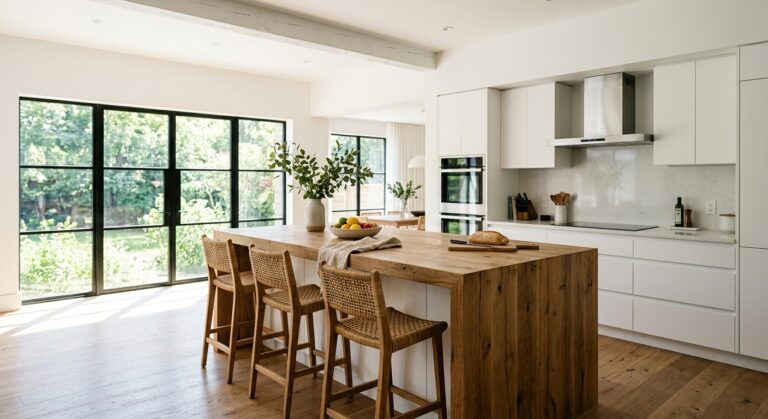
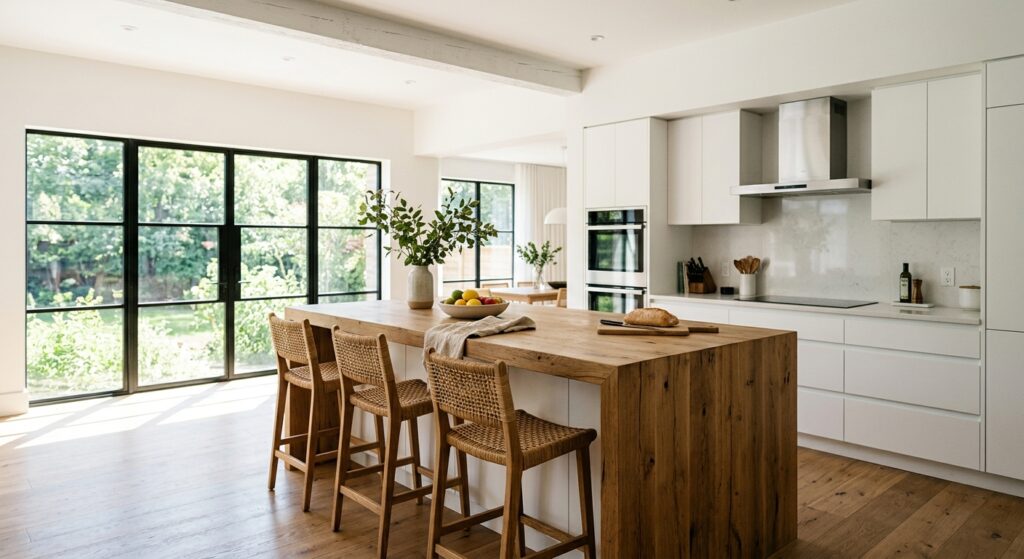
When homeowners in Mercer Island decide it is time to update their aging interiors, the conversation almost always turns to creating an expansive, open-concept floor plan. Knocking down the partition that separates a cramped, outdated culinary space from the main living and dining areas is a highly sought-after renovation. However, before anyone starts swinging a sledgehammer, there is one critical question that must be answered: how to tell if a wall is load bearing. Understanding the structural integrity of your home is not just about keeping the roof over your head; it is a fundamental requirement that dictates your budget, your timeline, and the very safety of your family.
Many mid-century and late 20th-century homes on the Island were designed with heavily compartmentalized rooms. Transforming these segmented boxes into a flowing, modern entertaining space requires careful planning. If you remove the wrong structural support, you risk catastrophic damage to the entire property. In this comprehensive guide, we will walk you through the architectural basics, outline the visual clues you can look for, and explain why identifying structural boundaries is the absolute most important first step in your remodeling journey.
The Appeal of an Open-Concept Kitchen in Older Mercer Island Homes
Mercer Island is renowned for its stunning properties, beautiful topography, and established neighborhoods. Many of the homes here were constructed decades ago when architectural tastes favored distinct, separated rooms. The kitchen was viewed strictly as a utilitarian workspace, often closed off by heavy doors and long partitions to hide the cooking mess from guests in the formal dining room.
Today, modern lifestyles demand something entirely different. The kitchen has evolved into the central hub of daily life. Families want to cook, socialize, do homework, and entertain all in one cohesive space. By tearing down interior barriers, homeowners can dramatically increase the flow of natural light, capitalize on beautiful views of Lake Washington, and create a welcoming environment that feels twice as large. Removing visual barriers instantly modernizes the feel of a vintage home, making the space highly desirable for both current living and future resale value.
However, the dream of sweeping sightlines comes with significant structural challenges. You cannot simply demolish whatever is in your way. To achieve that seamless flow, you must first understand the anatomy of your house and accurately determine which framing elements are holding the building up.
What is a Load-Bearing Wall and Why Does It Matter?
In residential construction, walls are generally categorized into two main types: structural and non-structural. A structural framework—often referred to as a weight-bearing wall—is an active component of your home’s skeletal system. Its primary job is to support the weight of the elements above it, such as the second floor, the attic, and the roof itself. This immense weight is transferred from the roof, down through the framing, and ultimately into the concrete foundation in the ground.
Conversely, a partition simply acts as a room divider. It supports nothing but its own weight and the drywall attached to it. If you were to remove a partition, the house would remain perfectly intact. But if you mistakenly demolish a crucial support element without putting an alternative structural beam in place, gravity will quickly take over. The immediate consequences of removing vital supports include sagging ceilings and misaligned doors, eventually leading to potential structural collapse.
“Treat every wall as if it is holding up the entire house until you have definitive, documented proof otherwise. Guesswork in structural remodeling is the fastest route to a catastrophic failure.”
Learning how to tell if a wall is load bearing is therefore not a trivial piece of trivia; it is the cornerstone of safe renovation practices. While an expert evaluation is ultimately required, knowing what to look for can help you plan your design and budget realistically.

3 Simple Signs Your Kitchen Wall is Load-Bearing
While you should never finalize a demolition plan without a licensed professional, there are several visual indicators that can give you a strong hint about a wall’s function. By investigating a few key areas of your home, you can gather valuable clues about how the building’s weight is distributed. Here are three primary indicators that suggest you are dealing with a critical structural element.
1. It Runs Perpendicular to the Floor Joists
One of the most reliable ways to assess structural responsibility is to examine the floor joists. Joists are the parallel wooden beams that support the floor above. To find out which way they run, you will need to look at an unfinished space, such as a basement or an attic.
- If the wall in your kitchen runs parallel to the joists above it, it is usually not supporting the main weight of the floor.
- If the wall intersects the joists at a 90-degree angle (perpendicular), there is a very high probability that it is supporting them.
When joists meet or overlap directly on top of a wall plate, that specific junction is a guaranteed indicator of a structural load transfer. In multi-story Mercer Island homes, these perpendicular intersections are how the weight of the upper bedrooms is carried down to the lower levels safely.
2. There Are Support Columns or Beams Directly Below It in the Basement
Gravity dictates that weight must be carried all the way down to the earth. If you want to know what a main floor wall is doing, go down to the basement or crawlspace directly beneath it. Look at the foundation structure in that specific footprint.
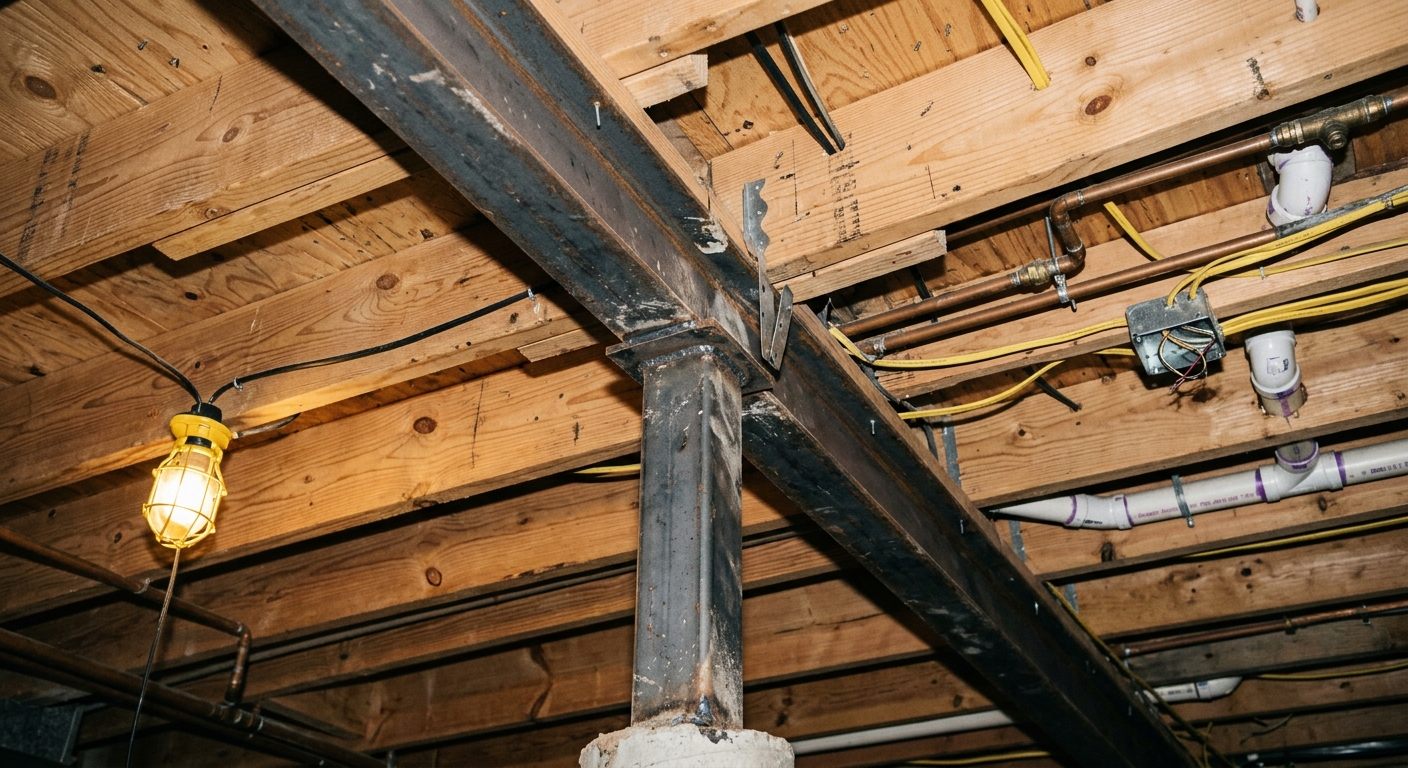
If you see a thick steel I-beam, heavy wooden girders, or vertical concrete or steel lally columns directly beneath the footprint of the kitchen wall, that wall is almost certainly bearing a massive load. The architecture is designed in a stacked formation so that the weight passes continuously downward. Tracing the vertical path of support from the roof to the basement is an essential step in structural diagnosis. If a wall has nothing but empty space beneath it, it is less likely to be bearing significant roof or floor loads.
3. It Connects Directly to the Foundation or Exterior Walls
Exterior walls are almost universally structural because they form the outer shell holding up the roof trusses. When an interior wall ties directly into an exterior boundary, especially near the center of the house, it is often acting as a central spine. In many older Mercer Island properties, a central hallway wall runs the entire length of the house, serving as the primary interior support.
Additionally, look closely at the foundation sill plate. If a framework is built directly onto a concrete foundation line or an integrated concrete footing, it was put there to handle heavy stress. Builders do not pour expensive concrete footings for simple room dividers.
Load-Bearing vs. Partition Walls: A Quick Comparison Table
To simplify the architectural concepts during your initial planning phase, it helps to see the differences laid out side-by-side. Use this reference table to understand the fundamental variations between structural supports and standard room dividers.
| Feature | Load-Bearing Wall | Partition (Non-Structural) Wall |
|---|---|---|
| Primary Function | Supports the weight of the roof, upper floors, and structure. | Divides interior spaces and provides privacy. |
| Joist Orientation | Usually runs perpendicular (at a 90-degree angle) to floor/ceiling joists. | Usually runs parallel to the joists above it. |
| Substructure | Sits directly above beams, support columns, or foundation walls. | Often rests simply on the subfloor with no direct beam below. |
| Removal Complexity | High. Requires temporary supports, structural engineering, and beam installation. | Low. Can typically be demolished with standard tools without causing structural harm. |
| Cost of Removal | Expensive ($3,000 – $10,000+) due to engineering, permits, and heavy materials. | Inexpensive. Mainly involves labor for demolition and drywall patching. |
Remember that this table provides general guidelines. Unique architectural designs, especially in custom hillside homes common to our area, may have complex load paths that break conventional rules.
Common Structural Problems When Removing Walls in Mercer Island Homes
The allure of a massive kitchen island and an uninterrupted view to the living room can sometimes tempt eager DIYers to start swinging hammers prematurely. When structural boundaries are breached without proper precautions, the effects are not always immediate, but they are always devastating and expensive to fix.
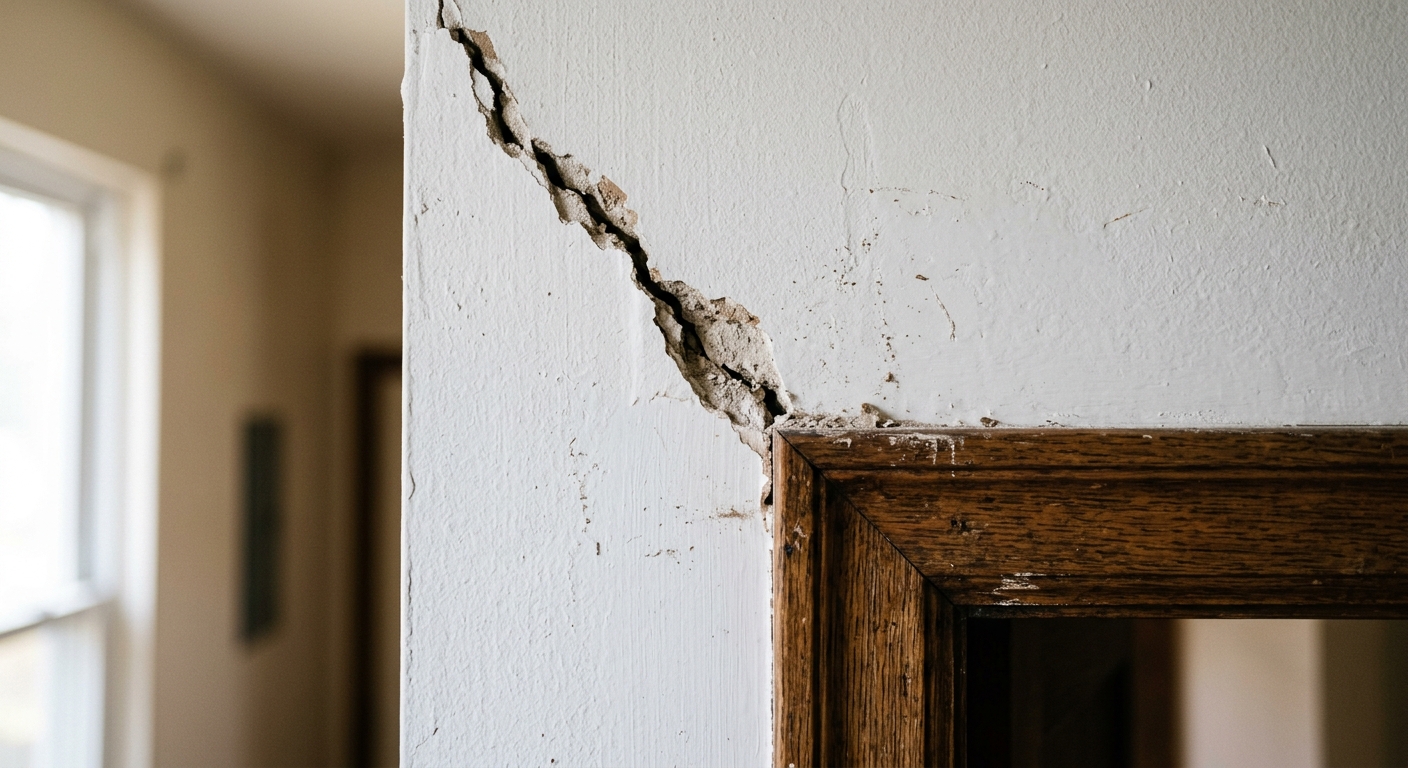
One of the earliest signs of compromised integrity is a sagging ceiling. Without the vertical support pushing up against the joists, the upper floor will begin to bow downwards under its own weight. You may notice severe, diagonal drywall cracks radiating from the corners of nearby doorways, indicating that the framing is shifting and settling unnaturally. Doors and windows in adjacent rooms will suddenly start to stick or refuse to latch because their frames are no longer perfectly square.
In extreme cases, removing a critical support can cause the floor on the second story to feel “bouncy” or spongy when walked upon. Plumbing pipes hidden in the cavities can be crushed by the settling framing, and electrical wiring can be stretched to the point of a fire hazard. Fixing these problems retroactively involves jacking up the sagging sections of the house—a process that is incredibly dangerous, highly disruptive, and costs exponentially more than doing the job correctly in the first place.
Why You Need a Structural Engineer and General Contractor
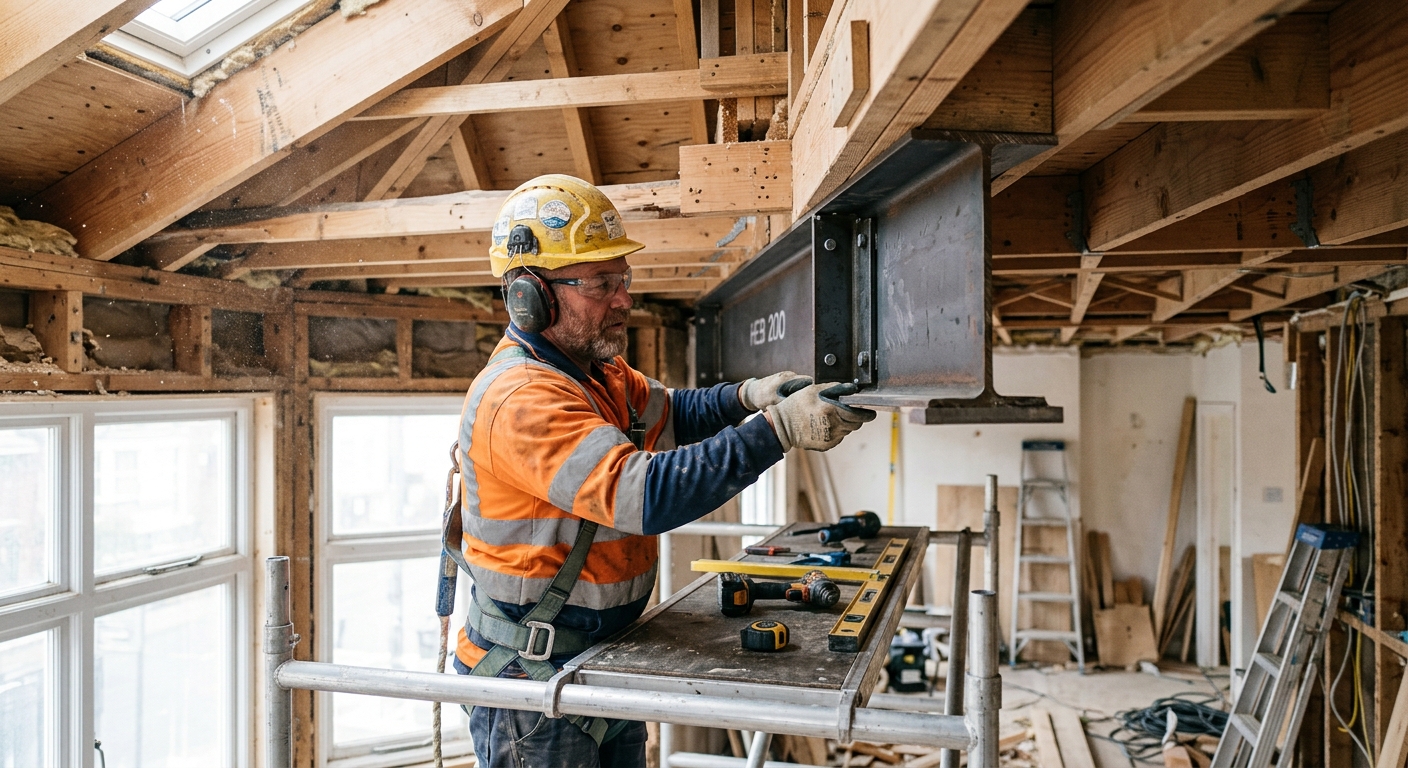
Figuring out how to tell if a wall is load bearing on your own is fine for dreaming, but executing the remodel requires licensed experts. A structural engineer is trained to calculate exactly how much weight a specific span must support. They will determine the precise sizing and material of the replacement beam needed—whether that is an Laminated Veneer Lumber (LVL) beam, a glue-laminated (glulam) timber, or a heavy-duty steel I-beam.
A qualified general contractor ensures that the engineer’s plan is executed flawlessly. Before the existing framing is touched, the contractor will build temporary shoring walls on both sides of the work area to carry the weight of the house during the transition. Attempting to replace structural supports without professional shoring can lead to instantaneous collapse. Furthermore, contractors coordinate the rerouting of hidden utilities. It is incredibly common for crucial plumbing stacks, HVAC ducts, and electrical conduits to be routed through these central walls. Rerouting them safely is a major component of the project that requires licensed tradespeople.
Mercer Island Homeowner FAQ: Wall Removal and Kitchen Remodels
Navigating the logistics of a major renovation in a specific municipality brings up a lot of practical questions. Based on top inquiries from local homeowners planning open-concept projects, here are the most frequently asked questions regarding structural remodeling.
Do I need a permit from the City of Mercer Island to remove an interior wall?
Yes, absolutely. The Mercer Island Community Planning and Development Department strictly regulates structural alterations. While a simple bathroom or kitchen remodel that only involves cosmetic changes (like swapping cabinets) might bypass intensive structural review, removing any load-bearing element explicitly triggers the need for a formal building permit. You will be required to submit architectural plans and structural calculations stamped by a licensed engineer to prove that your proposed beam will safely support the existing loads.
How much does it cost to replace a load-bearing wall with a support beam?
Costs vary widely based on the span of the opening and the complexity of the utilities hidden inside. On average, homeowners can expect to spend between $3,000 and $10,000 just for the structural portion of the removal. If you opt for a “flush beam”—where the support beam is pushed up into the ceiling cavity so it is completely invisible—the cost will be on the higher end due to the intense labor required to cut and hang the joists. A “dropped beam” that sits visibly below the ceiling line is generally more cost-effective.
Can any wall be removed to create an open floor plan?
In theory, yes. With enough engineering ingenuity, steel, and financial investment, almost any architectural barrier can be bypassed. However, some walls contain crucial mechanical systems that are virtually impossible to relocate cheaply. For example, if a wall contains the main plumbing drain stack for the entire second floor, rerouting that massive pipe to a different area of the house might be cost-prohibitive. An expert assessment will tell you not just if a wall can be removed, but whether it is financially logical to do so.
Summary: Safely Achieving Your Open-Concept Dream
Transforming a compartmentalized, outdated layout into a breathtaking, open-concept living space is one of the most rewarding renovations you can undertake in a Mercer Island home. It modernizes the flow, invites in natural light, and creates a highly sociable environment for family and friends. However, realizing this vision safely requires an immense respect for the physical forces holding your house together.
Understanding how to tell if a wall is load bearing gives you a foundational grasp of your home’s architecture. By checking joist directions, inspecting basement supports, and observing foundation connections, you can formulate a realistic preliminary plan. Yet, these visual checks never replace the authoritative calculations of a licensed structural engineer and the skilled execution of a professional contractor. Always secure the proper city permits, invest in expert guidance, and prioritize the structural integrity of your home above all else. With the right team and the right preparation, you can confidently tear down those barriers and step into the spacious, open kitchen of your dreams.