Fireplace Designs in Modern Home Remodeling
A fireplace is no longer just a heat source. In modern home remodeling, it functions as a focal point, a design anchor, and a structural feature that defines the character of a living space. Whether integrated into a full interior renovation or added as a statement element, a well-designed fireplace transforms how a room feels and functions.
Custom fireplace design focuses on proportion, material selection, layout integration, and visual balance. When executed correctly, it enhances both daily living and long-term property value.
Why Fireplaces Matter in Interior Design
Fireplaces naturally draw attention. The placement, scale, and finish influence the entire layout of a room. In open-concept homes, fireplaces often anchor seating arrangements and provide visual structure to otherwise expansive spaces.
Benefits of a professionally designed fireplace include:
- Strong architectural focal point
- Increased property appeal
- Improved space definition
- Enhanced atmosphere and comfort
- Seamless integration with modern interiors
When incorporated into broader home remodeling projects, fireplace design should align with flooring, wall treatments, and lighting for cohesive results.
Linear Gas Fireplaces: Clean and Contemporary
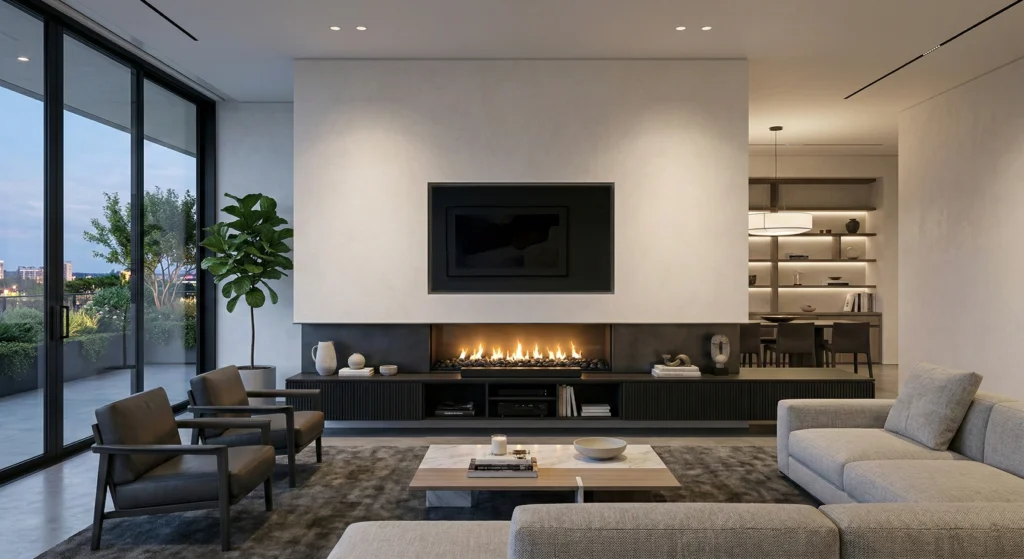
Linear gas fireplaces have become one of the most requested designs in modern interiors. Their elongated shape creates a sleek horizontal emphasis that complements open layouts.
Key Features:
- Frameless glass fronts
- Minimal visible hardware
- Remote or smart controls
- Customizable flame presentation
These fireplaces are often integrated into full-height feature walls with integrated shelving or media units. The clean lines make them ideal for contemporary remodeling.
Floor-to-Ceiling Statement Fireplaces
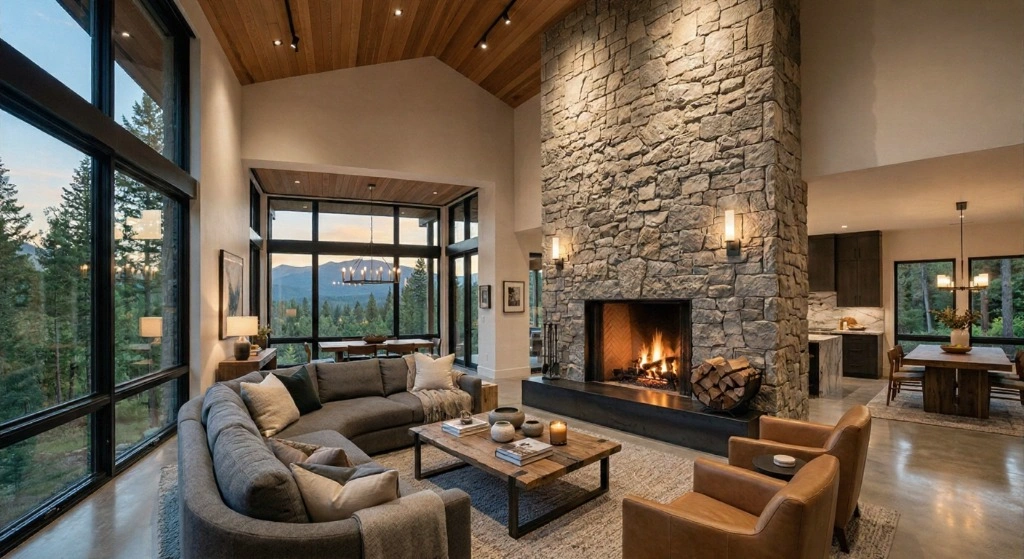
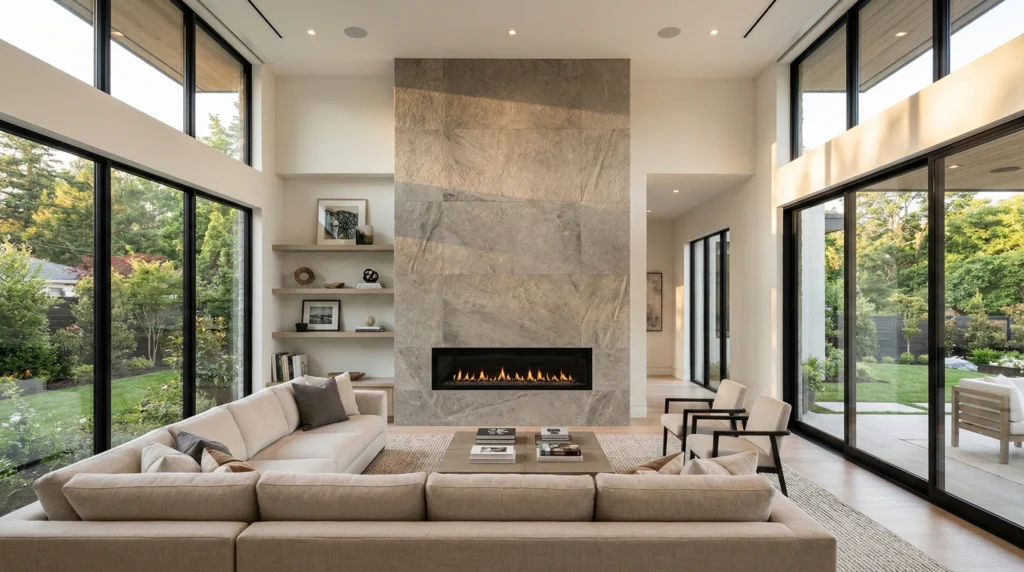
A floor-to-ceiling fireplace transforms the vertical dimension of a room. Whether clad in natural stone, large-format tile, or textured plaster, it introduces architectural scale.
Popular material choices include:
- Natural stone slabs
- Porcelain panels
- Smooth plaster finishes
- Vertical wood slats
This design approach works particularly well in homes with higher ceilings, emphasizing height and creating visual impact.
Built-In Fireplace Walls with Storage
Modern remodeling often integrates fireplaces into custom-built feature walls.
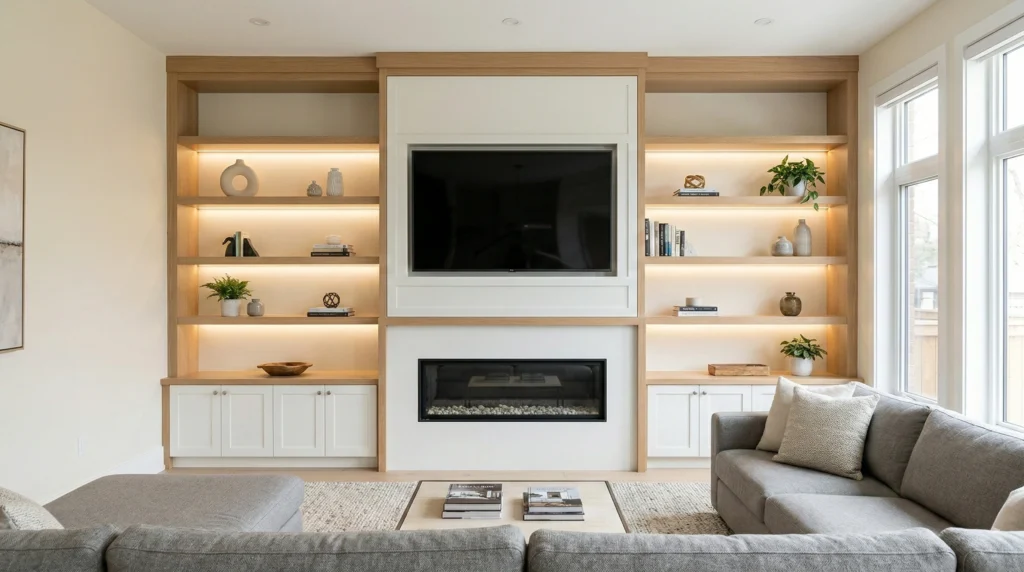
These installations combine:
- Central fireplace unit
- Floating shelves or cabinetry
- Concealed wiring
- Integrated lighting
This solution maximizes both function and aesthetics. It eliminates clutter and creates a structured focal wall that supports media systems and décor without overwhelming the space.
Double-Sided and See-Through Fireplaces
For larger homes or open layouts, double-sided fireplaces create separation without blocking sightlines.
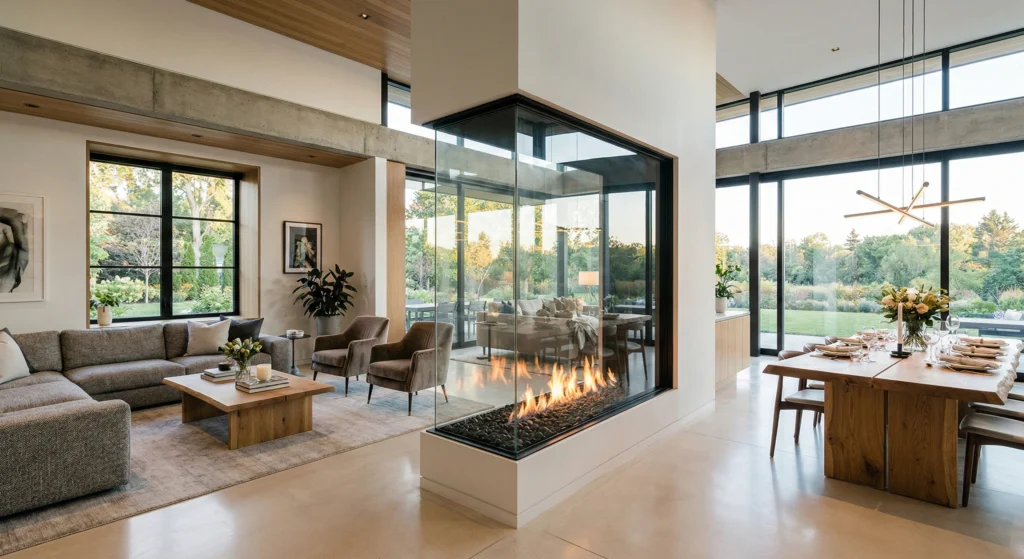
These fireplaces are often installed between:
- Living and dining rooms
- Bedroom and bathroom suites
- Indoor and covered outdoor spaces
They provide warmth and visual continuity from multiple angles while preserving openness.
Material Selection: Stone, Tile, and Plaster
Material selection defines the character of a fireplace.
Natural Stone
Stone offers texture and durability. It works well in both modern and transitional interiors.
Large-Format Tile
Large porcelain slabs reduce grout lines and create a sleek, continuous look.
Plaster or Microcement
Minimalist finishes like plaster or microcement support contemporary aesthetics by eliminating visible seams.
The choice of material should complement flooring and wall finishes to maintain visual harmony throughout the home.
Fireplace Mantels: Minimal or Architectural
Traditional mantels have evolved into cleaner, more intentional elements.
Options include:
- Floating wood mantels
- Thin steel ledges
- Integrated stone extensions
- Frameless flush installations
Minimal mantels are often preferred in modern interiors, while thicker wood beams work well in transitional spaces.
Electric vs. Gas Fireplaces
Choosing between electric and gas depends on installation flexibility and performance goals.
Electric Fireplaces:
- Easier installation
- No gas line required
- Adjustable flame visuals
- Suitable for upper floors or condos
Gas Fireplaces:
- Real flame and stronger heat output
- More natural aesthetic
- Long-term durability
Each option can be customized within broader interior remodeling services to ensure proper ventilation and structural integration.
Integrating Fireplaces Into Open-Concept Homes
In open layouts, fireplace placement must align with furniture planning and traffic flow.
Key considerations:
- Centering within primary seating areas
- Aligning with ceiling features
- Avoiding obstruction of natural light
- Coordinating with built-in cabinetry
Proper scale is critical. An undersized fireplace gets lost; an oversized unit overwhelms the space.
Lighting and Fireplace Design
Lighting enhances fireplace impact.
Common enhancements include:
- Recessed ceiling lights
- LED strip lighting in shelving
- Accent wall washers
- Integrated hearth lighting
Subtle lighting highlights material textures and enhances the flame effect without overpowering the room.
Outdoor Fireplace Extensions
Outdoor living areas increasingly incorporate fireplace designs that mirror indoor aesthetics.
Outdoor fireplaces:
- Extend living space
- Create year-round usability
- Increase entertainment value
- Maintain design continuity
Matching indoor and outdoor materials creates seamless transitions.
Structural and Safety Considerations
Fireplace remodeling requires proper planning.
Critical factors include:
- Ventilation systems
- Heat-resistant materials
- Framing support
- Clearance requirements
- Local building code compliance
Professional installation ensures structural safety and long-term performance.
When to Upgrade or Redesign a Fireplace
Fireplace remodeling is recommended when:
- The design feels outdated
- The unit lacks efficiency
- The surround materials are damaged
- The room layout has changed
- A full interior remodel is underway
Updating a fireplace during broader remodeling minimizes disruption and ensures cohesive results.
Final Thoughts
A well-designed fireplace defines the atmosphere of a home. Whether minimalist and linear, dramatic and floor-to-ceiling, or integrated into custom built-ins, the right design enhances both functionality and architectural identity.
In modern home remodeling, fireplace design should never be an afterthought. It should be planned alongside flooring, lighting, and layout decisions to ensure that the entire space feels intentional, balanced, and built to last.