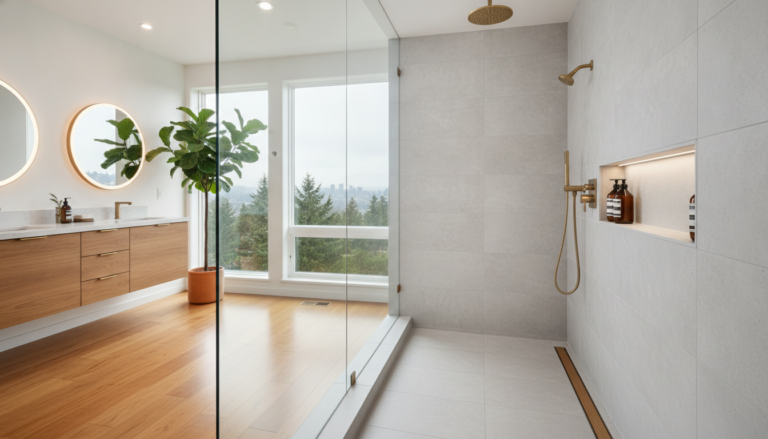
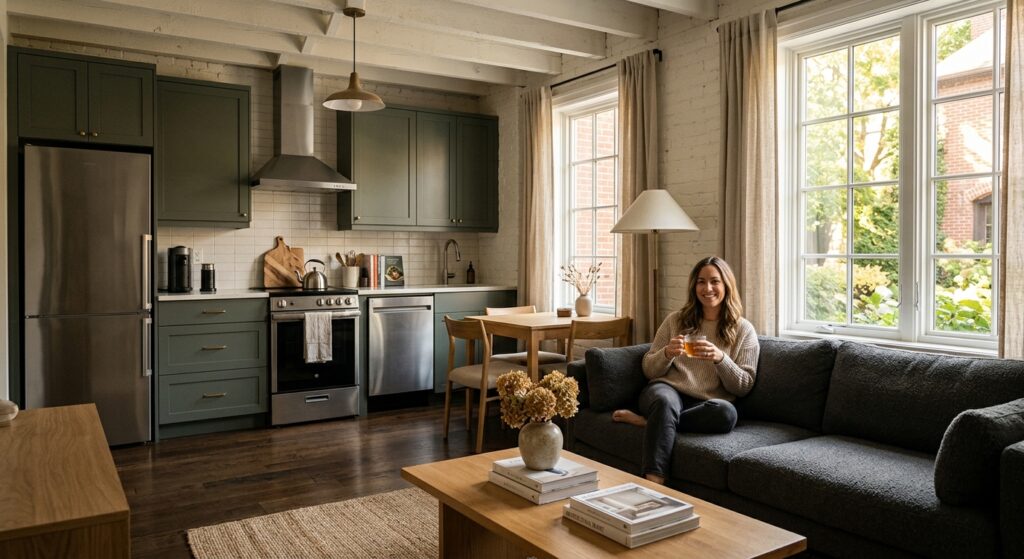
To legally convert a basement into a mother in law suite addition in King County, you must meet several critical building requirements. The foundational steps involve providing a completely separate entrance, installing appropriately sized egress windows in all designated sleeping areas for emergency rescue, and securing the necessary local building permits. The average cost for a comprehensive basement conversion into an independent living space in the Greater Seattle area typically ranges from $80,000 to $150,000. This price fluctuation depends heavily on the necessity of expanding existing plumbing and electrical infrastructure. With recent progressive shifts in Washington State zoning laws, creating an accessory dwelling unit (ADU) has become an incredibly viable solution for accommodating aging relatives or generating rental income. This comprehensive guide will walk you through the regulations, pricing structures, and essential planning steps to ensure your project is a resounding success from the initial blueprint to the final inspection.
Quick Answer: Key Requirements & Costs for a Legal Basement ADU
Before you begin tearing down drywall or finalizing floor plans, it is imperative to understand the baseline criteria for establishing a legal secondary dwelling in your home. A mother in law suite addition is not just a renovated recreation room; it is categorized as a formal Accessory Dwelling Unit under Washington State building codes. Consequently, the space must function entirely independently from the primary residence. Here are the non-negotiable requirements for a compliant basement conversion:
- Independent Access: The unit must feature its own lockable exterior door that does not require passing through the main house.
- Egress Compliance: Every bedroom must have an egress window meeting strict minimum clearance dimensions to allow safe escape during an emergency.
- Dedicated Facilities: You must include a fully functional kitchen (with a stove, sink, and refrigerator) and a dedicated full bathroom.
- Fire Separation: Proper fire-rated drywall and acoustic insulation must be installed between the primary residence and the lower-level suite.
The financial investment for these modifications is substantial but incredibly rewarding. Property owners should prepare for costs between $80,000 and $150,000. Securing funding and applying for local permits early are the most vital steps in expediting the construction timeline and avoiding regulatory delays.
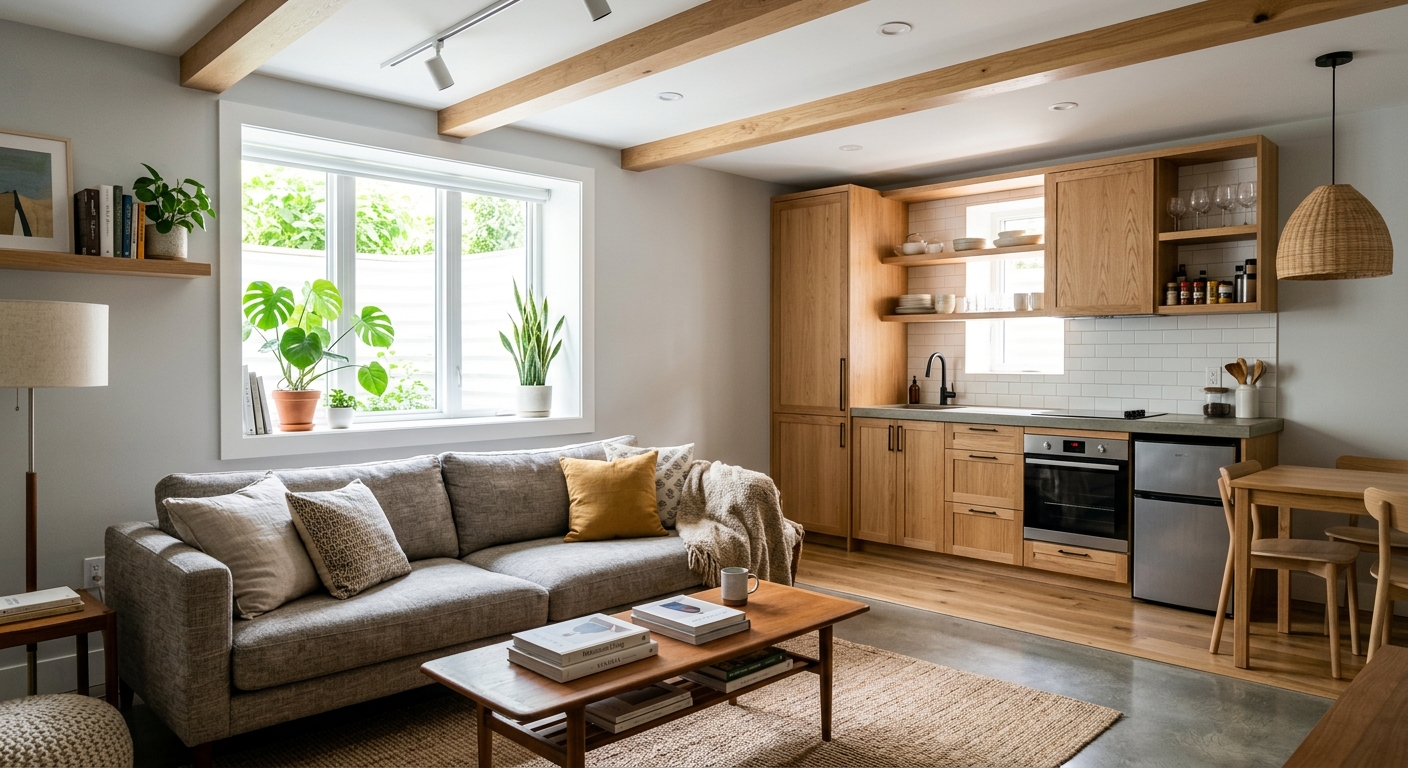
Why Mother-in-Law Suites Are Booming in the Greater Seattle Area
The Greater Seattle region, encompassing bustling cities like Bellevue, Renton, and Newcastle, is currently experiencing a severe housing shortage coupled with skyrocketing living expenses. In response, homeowners are continuously looking for innovative ways to maximize their property’s footprint. The traditional mother in law suite addition has evolved from a simple guest room into a highly sought-after, fully equipped secondary apartment. By utilizing an underused basement, families can dramatically increase their property value without expanding the actual footprint of their home.
Moreover, the modern work-from-home revolution and shifting family dynamics have encouraged multi-generational living. Many homeowners are finding that maintaining a large, empty lower level is financially inefficient. Transforming that space into an ADU allows them to either host family members in a comfortable, private setting or lease the unit to long-term tenants, thereby offsetting expensive monthly mortgage payments. Maximizing existing square footage rather than purchasing a larger home is a financially prudent strategy in today’s highly competitive real estate market.
A Smart Solution for Aging Parents Amid Rising Care Costs
One of the primary drivers behind the surge in basement conversions is the astronomical cost of elder care facilities in Washington State. Assisted living and nursing homes in King County demand exorbitant monthly fees, which many families simply cannot afford or justify. A well-designed mother in law suite addition provides a perfect compromise. It allows aging parents to maintain their independence and privacy in a bespoke living space while remaining mere steps away from their family for support and emergency assistance.
Investing in a custom accessory dwelling unit often pays for itself within three to five years when compared to the ongoing, compounding costs of private assisted living facilities. It is a long-term investment in both family well-being and real estate equity.
Beyond the financial benefits, keeping loved ones close fosters stronger family bonds and improves the mental health of elderly family members. When designing for seniors, consider incorporating universal design elements such as zero-threshold showers, wider doorways for wheelchair accessibility, and reinforced grab bars. Planning for future mobility limitations during the initial design phase will save thousands of dollars in retrofitting costs down the line.
Navigating the New Washington State ADU Zoning Laws
For decades, restrictive zoning regulations stifled homeowners’ ability to construct accessory dwelling units. However, recent legislative changes in Washington State have drastically simplified the process. The state has recognized that encouraging the development of ADUs is a practical, immediate solution to the ongoing housing crisis. Consequently, sweeping mandates have been passed to limit the restrictions that local municipalities can impose on property owners seeking a mother in law suite addition.
Key legislative updates now prevent cities from requiring owner-occupancy for the primary residence, meaning you can rent out both the main house and the ADU independently if you choose. Furthermore, restrictive off-street parking requirements have been significantly reduced or eliminated entirely in areas near public transit hubs. These progressive changes have opened the floodgates for property owners in King County, making it easier than ever to build. However, it is crucial to understand that while state laws dictate the baseline, individual cities still enforce specific aesthetic and structural guidelines. Consulting the most recent local municipal codes is mandatory before finalizing any architectural blueprints or breaking ground.
Essential Building Rules for Basement Conversions in King County
Converting a subterranean space into a habitable, legal living area is vastly different from remodeling a traditional above-ground room. King County’s Department of Local Services mandates rigorous building codes to ensure the health and safety of the occupants. A legal mother in law suite addition must strictly adhere to regulations governing ceiling heights, ventilation, moisture control, and natural lighting. Basements are inherently prone to dampness and low ambient light, meaning contractors must implement robust waterproofing measures and install specialized HVAC systems to maintain a healthy indoor air quality. Failure to meet these stringent environmental controls will inevitably result in failed municipal inspections and costly construction delays.
Egress Windows and Bedroom Safety Dimensions
One of the most heavily scrutinized elements during a basement ADU inspection is the egress window. An egress window is a specially designed opening that provides a safe escape route in the event of a fire, as well as access for fully equipped emergency personnel. According to the International Residential Code (IRC) adopted by King County, every sleeping room within a mother in law suite addition must feature at least one operable emergency escape and rescue opening.
The specific dimensions are strictly enforced and non-negotiable. The window must have a minimum net clear opening of 5.7 square feet. The minimum opening height must be 24 inches, and the minimum opening width must be 20 inches. Furthermore, the bottom of the clear opening cannot exceed 44 inches measured from the finished floor. Because basements are below grade, constructing an exterior window well is almost always necessary. Excavating and installing a compliant window well with proper drainage is a complex procedural step that requires heavy machinery and precise engineering to prevent structural foundation damage or future flooding.
Separate Entrances, Electrical Upgrades, and Plumbing
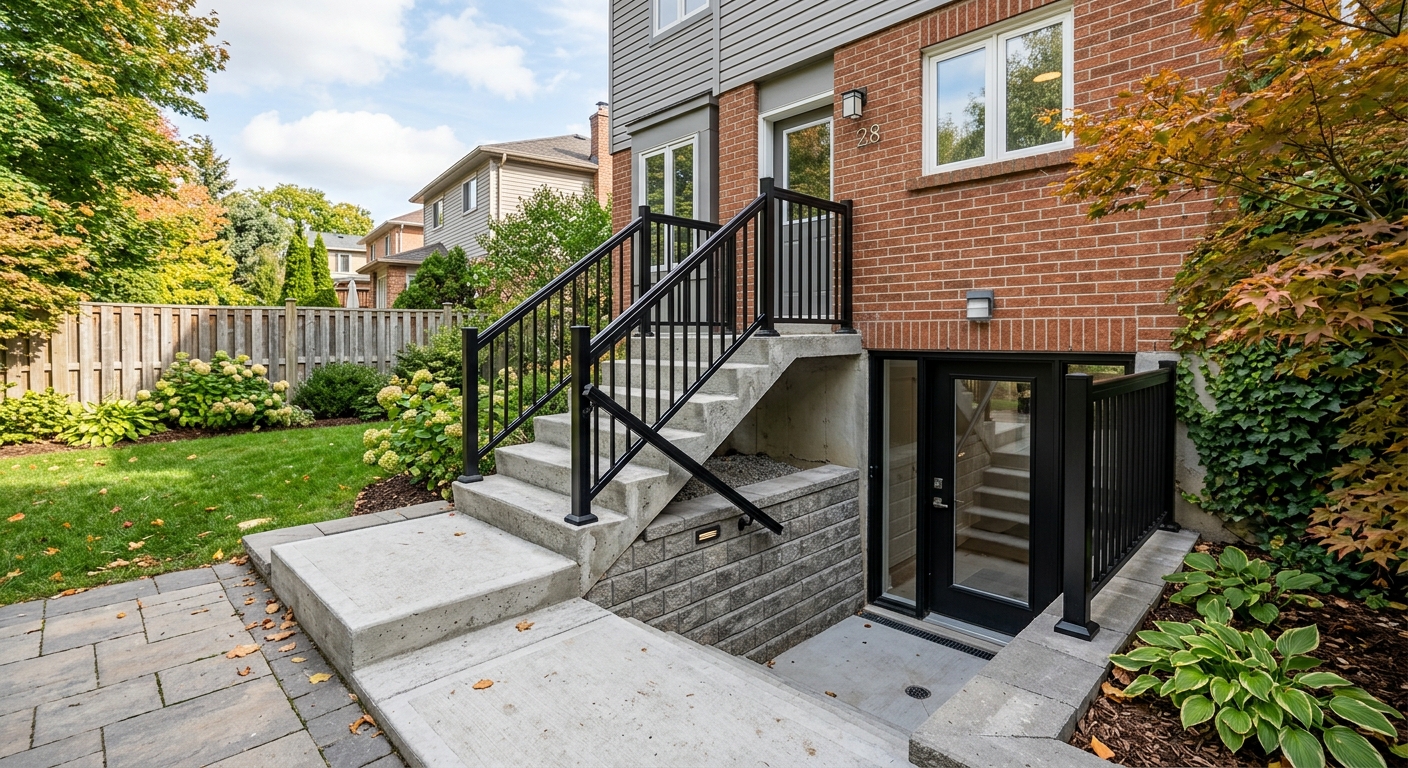
Privacy and autonomy are the absolute hallmarks of a successful accessory dwelling unit. Therefore, a mother in law suite addition requires a completely separate exterior entrance. This often involves cutting through the concrete foundation to install a secure, weather-sealed door, accompanied by exterior lighting and a dedicated pathway for safe access at night.
Equally important are the invisible structural systems: electrical and plumbing. Most older homes in King County are simply not equipped with electrical panels capable of supporting a second full kitchen, independent heating systems, and additional appliances. You will likely need to upgrade your main electrical service panel to 200 amps or more and install a dedicated sub-panel for the ADU. Plumbing presents a similar challenge. Tying a new bathroom and kitchen sink into the existing sewer line might require trenching the concrete floor or installing a sewage ejector pump if the municipal sewer line sits higher than your basement floor. Conducting a thorough capacity analysis of your existing utility infrastructure is a crucial early step to avoid unexpected budget overruns later in the project.
How Much Does a Basement Mother-in-Law Suite Cost?
Budgeting for a major home renovation can be intimidating. Homeowners frequently ask for a flat rate, but the reality is that the cost of a mother in law suite addition is highly variable. Unlike building from scratch on flat land, a basement conversion requires working within the constraints of an existing structure. You must navigate low ceilings, load-bearing columns, and aging concrete foundations. Despite these challenges, utilizing an existing envelope is still significantly cheaper than constructing a detached backyard cottage. The general expected price bracket in the Greater Seattle market consistently falls between $80,000 and $150,000.
Breaking Down the $80,000 to $150,000 Price Range
To demystify the financial investment, it is helpful to look at a granular breakdown of where your money actually goes during a basement conversion. High-end finishes, extensive foundation modifications, and necessary utility upgrades will push the project toward the higher end of the spectrum. Below is an estimated cost distribution for a standard mother in law suite addition in King County:
| Project Phase | Estimated Cost Range | Description of Work |
|---|---|---|
| Design, Engineering & Permits | $8,000 – $15,000 | Architectural plans, structural engineering, and King County/City permit fees. |
| Demolition & Framing | $10,000 – $20,000 | Clearing existing structures, concrete cutting for egress/doors, and interior framing. |
| Plumbing & Electrical | $20,000 – $35,000 | Panel upgrades, sub-panels, trenching for sewer lines, and water supply installation. |
| Insulation, Drywall & Paint | $12,000 – $25,000 | Fire-rated drywall installation, soundproofing, and interior painting. |
| Kitchen & Bath Finishes | $25,000 – $45,000 | Cabinetry, countertops, appliances, shower installation, and fixtures. |
| Flooring & Final Trims | $5,000 – $10,000 | Luxury vinyl plank, baseboards, doors, and hardware. |
Allocating a 15% contingency fund is a highly recommended practice to cover unforeseen complications, such as discovering mold, asbestos, or deteriorated plumbing during the demolition phase.
Building in Bellevue, Renton, or Newcastle: Local Permitting Nuances
While King County provides an overarching framework, the specific cities within the Greater Seattle region operate their own distinct permitting departments. A mother in law suite addition in Bellevue will follow a different bureaucratic path than one in Renton or Newcastle. For instance, Bellevue has strict regulations regarding tree preservation and lot coverage, which, while more applicable to detached units, can occasionally impact exterior basement stairwell excavations.
Renton has actively worked to streamline their ADU permitting process to encourage affordable housing development, often resulting in faster approval times if your architectural plans are flawless. Newcastle, being a slightly more suburban and residential-focused community, places heavy emphasis on neighborhood aesthetics and maintaining the visual character of the primary residence from the street view. It is imperative that your architectural designer thoroughly understands the idiosyncratic demands of your specific municipality. Submitting incomplete or non-compliant plans will result in extensive review cycles, pushing your project timeline back by several months and increasing holding costs.
Why Hiring an Expert General Contractor is Crucial for ADU Projects
Executing a flawless basement conversion is not a weekend DIY project. It requires a symphony of skilled tradesmen, including structural engineers, master electricians, licensed plumbers, and drywall experts. When planning a mother in law suite addition, partnering with an experienced general contractor who specializes specifically in accessory dwelling units is the smartest investment you can make.
A specialized contractor does far more than just manage the construction schedule and hammer nails. They act as your dedicated liaison with city planners, ensuring that every permit application is accurate and submitted on time. They know how to optimize small spaces, recommending space-saving HVAC systems like ductless mini-splits or instantaneous tankless water heaters. Furthermore, a reputable general contractor understands how to effectively mitigate sound transmission between the main floor and the basement suite using resilient channels and high-density acoustic insulation. Verifying your contractor’s licensing, insurance, and portfolio of similar ADU projects is the single most critical step before signing any construction agreement.
Summary: Ready to Start Your Basement ADU Transformation?
Transforming a dark, underutilized basement into a vibrant, independent living space is an incredibly rewarding endeavor. A carefully planned mother in law suite addition offers unparalleled flexibility, providing a safe haven for aging parents, a private apartment for adult children, or a lucrative rental property to generate reliable passive income. While the initial costs ranging from $80,000 to $150,000 may seem daunting, the immediate increase in your property value and the long-term savings on elder care or mortgage assistance make it a highly sound financial decision.
As the Greater Seattle area continues to grow and adapt to new housing demands, taking advantage of the relaxed Washington State zoning laws puts you ahead of the curve. The key to a seamless, stress-free project lies in meticulous planning, understanding local building codes regarding egress and utilities, and collaborating with top-tier construction professionals who know the King County landscape. If you have the space and the budget, there has never been a better time to unlock the hidden potential beneath your feet. Start gathering your design ideas, consult with an expert general contractor, and take the first definitive step toward building the ultimate accessory dwelling unit today.